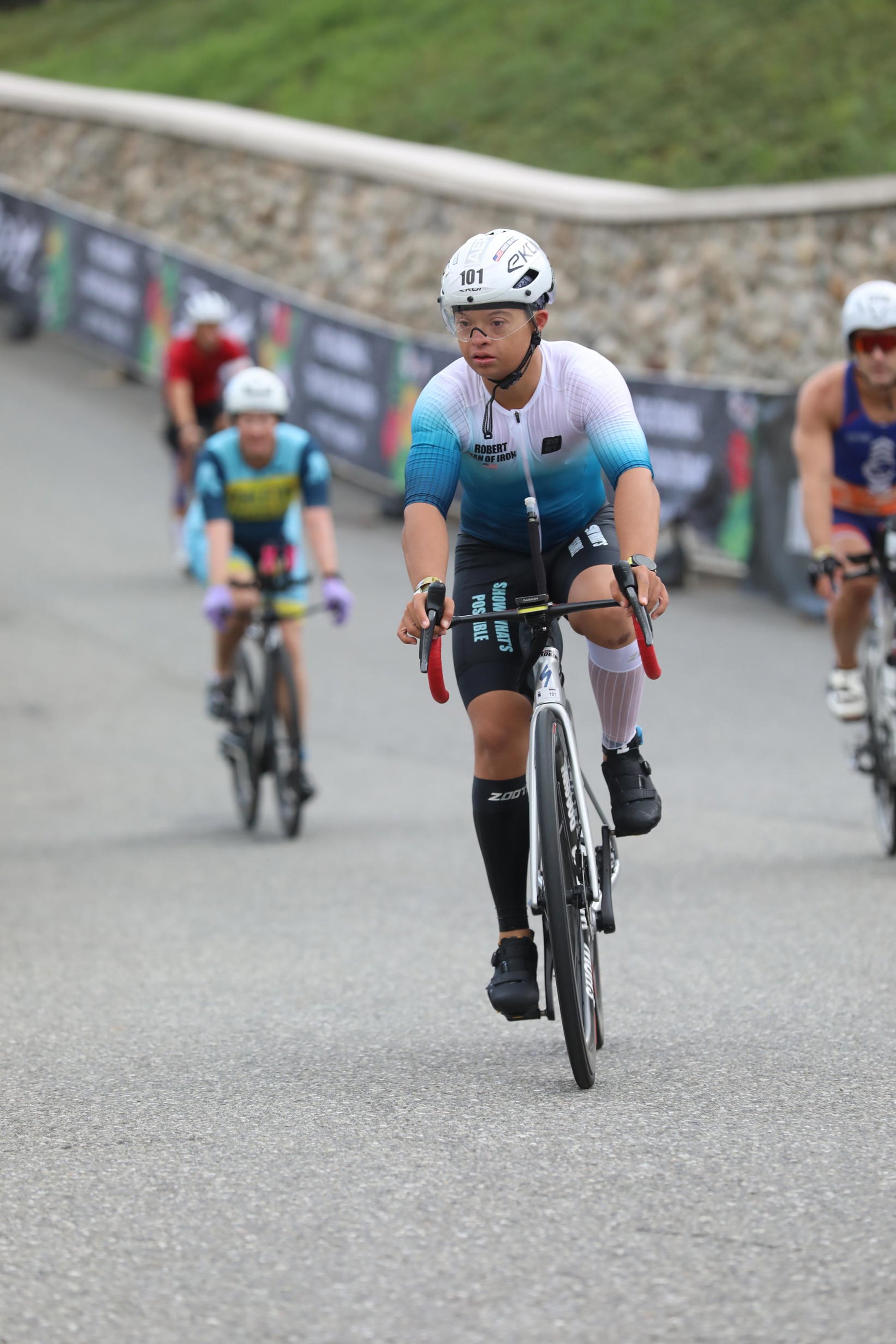
Meet Robert: The Man of Iron
When Robert was born, his mom, Wanda, thought she had a pretty good idea of what Down syndrome might mean for his life.
She had worked with children with special needs, including children with Down syndrome, as a teenager. But Robert had something to teach her that no experience or expectation could have prepared her for.
From the very beginning, Robert showed signs of the person he would become. His pediatrician looked at him as a newborn and predicted that Robert would be a fighter and very determined.
He was right.
As Robert grew, his personality became impossible to overlook. He was observant, independent, funny, competitive, and very sure of what he wanted. Little by little, he challenged the assumptions his mom had carried with her.
“For me, it wasn’t one single moment,” Wanda says. “Robert changed the way I saw Down syndrome little by little as he grew.”
“Let me try.”
Even as a young child, Robert was paying attention to the world around him.
He would stop and listen when someone left a message on the answering machine. He knew where the family was going in the car. He reminded his mom about stop signs and red lights.
And at school, he made something else very clear: he wanted independence.
Robert wanted to be in a regular classroom, and he did not want an aide constantly beside him. At the time, he called the aide his “maid.”
His family understood what he was really saying.
He wanted the chance to do things for himself.
Long before marathons, IRONMAN races, and Guinness World Records, Robert was already communicating a message that would become a theme throughout his life:
Let me try.
“That determination to be independent has always been part of Robert,” Wanda says.
See the person before the diagnosis
Robert’s story has changed the way his family thinks about Down syndrome.
“I wish more people understood that Robert is an individual first,” Wanda says. “He is not a diagnosis.”
Robert is an athlete, a son, a brother, an employee, a runner, a swimmer, a cyclist, and a member of his local running community. He works at Publix, loves to travel, enjoys training, and is always looking toward the next challenge.
If you met Robert for the first time, chances are he would tell you about his next race before he told you about Down syndrome.
He sees himself as an athlete first.
That is one of the reasons Robert’s story resonates so deeply with us at RODS Heroes. His life reminds us that a diagnosis can be part of someone's story without becoming the story.
The mindset of a Man of Iron
Robert has taken on endurance challenges that require extraordinary discipline and consistency.
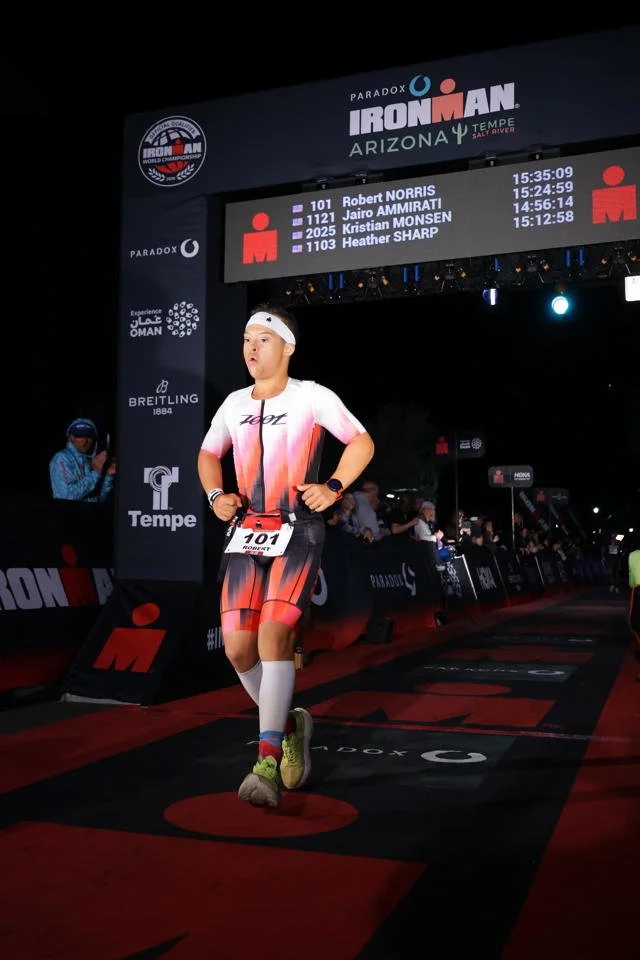
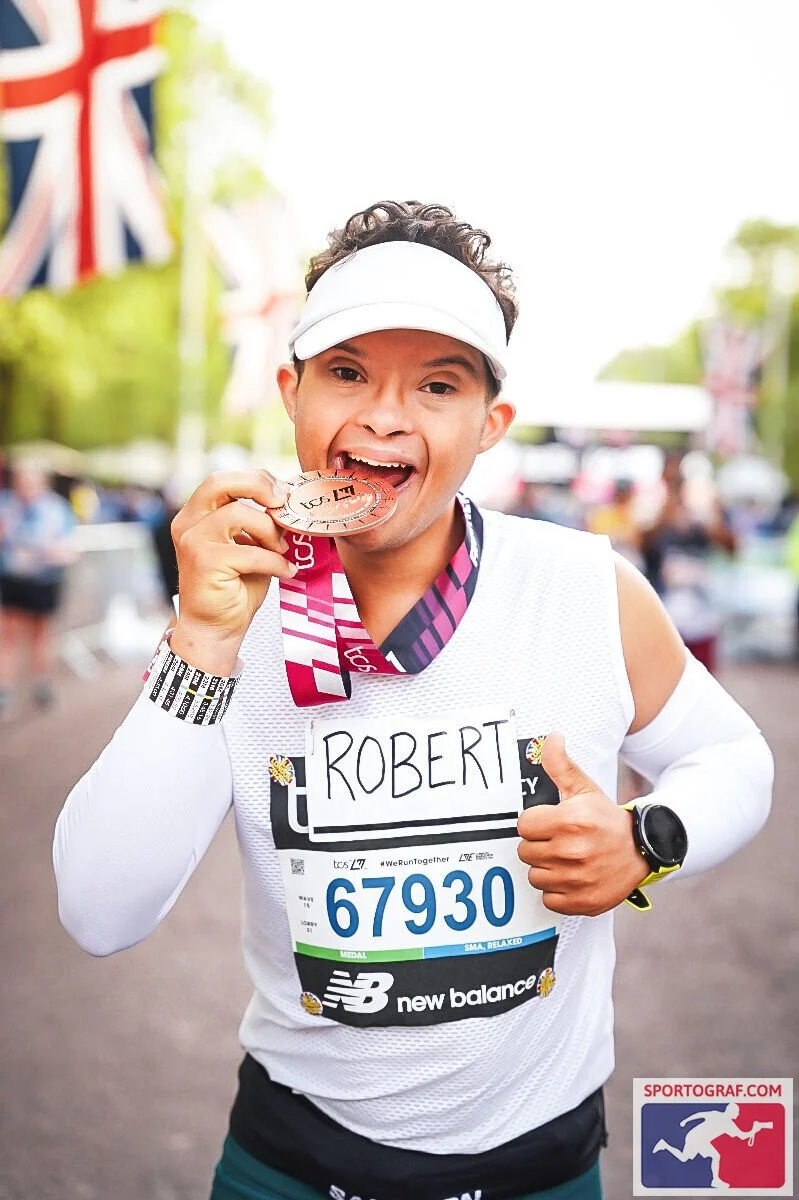
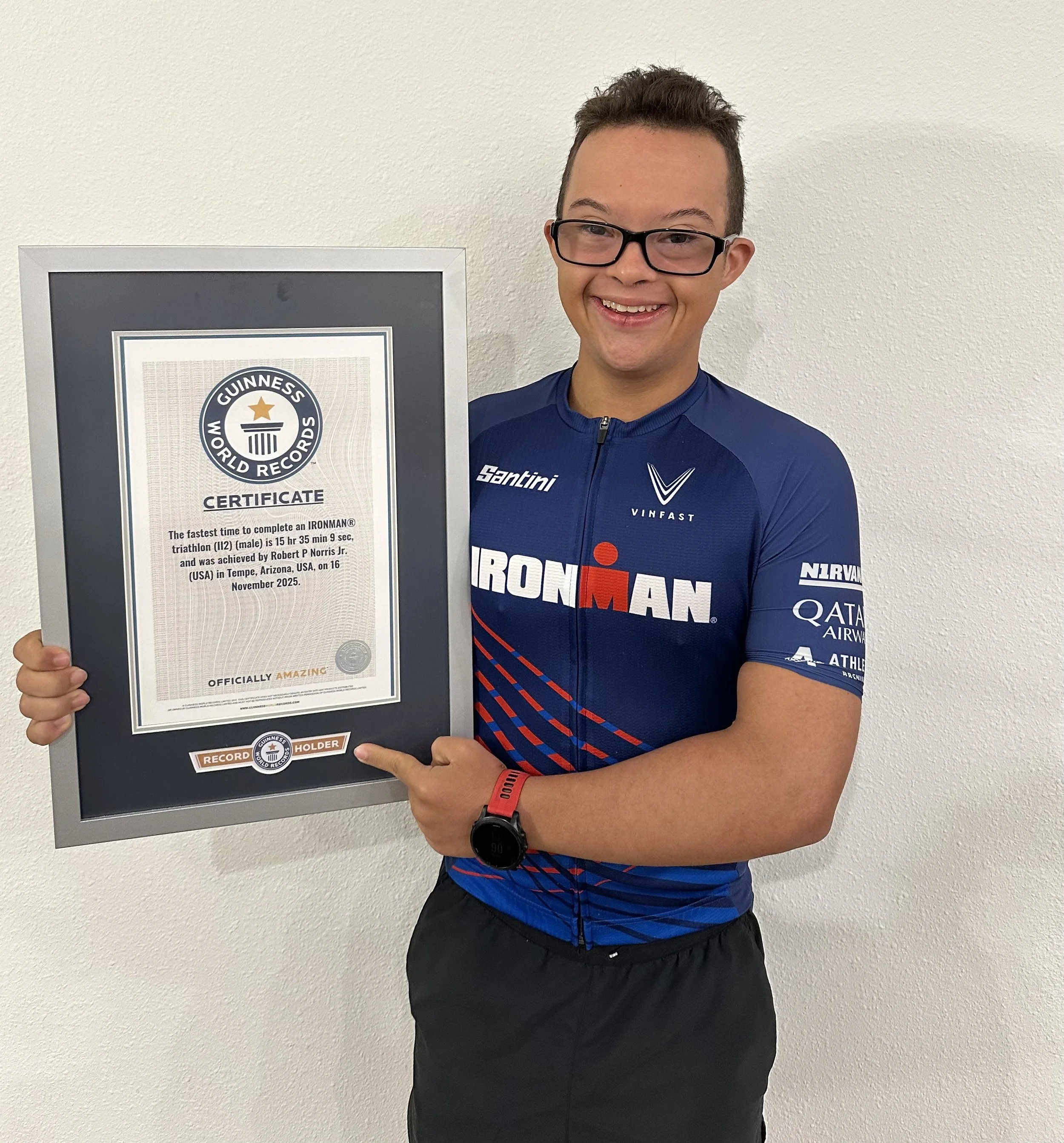
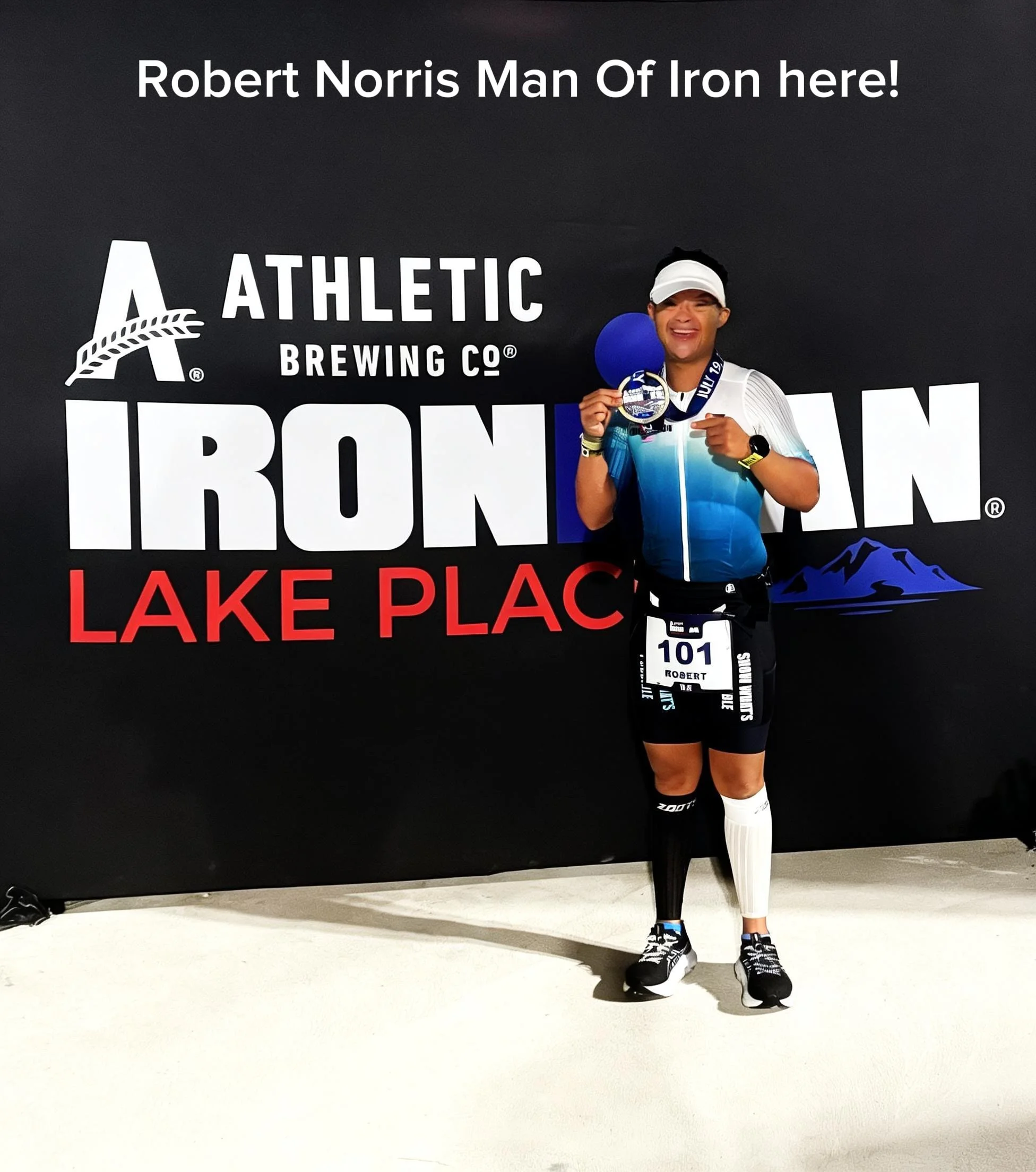
He has completed marathons, ultramarathons, and full IRONMAN races. He has traveled around the world to compete. He is a three-time Guinness World Record holder.
And one accomplishment captures his mindset particularly well.
At IRONMAN Arizona, Robert completed the full 140.6-mile race independently — swimming, biking, and running for more than 15 hours without a guide.
When something is hard, Robert doesn't automatically see a reason to stop.
He sees a reason to keep going.
“Robert’s superpower is his mindset,” Wanda says. “When something is hard, he doesn’t back away from it. He keeps going.”
That determination is at the heart of the Robert Norris Man of Iron Foundation, where Robert hopes to use endurance sport to challenge assumptions about human potential and encourage people to see individuals for who they are rather than what they assume because of a diagnosis.
Don't decide someone's limits for them
Perhaps the greatest lesson Robert has taught his mom isn't about running, swimming, cycling, or athletic achievement.
It is about opportunity.
“When Robert was born, I worried about what he might not be able to do because I was looking at Down syndrome before I really knew Robert,” Wanda says.
Her perspective has changed.
“Give them opportunities, let them try, let them make choices, let them succeed, let them fail, and let them surprise you.”
Robert has certainly done his share of surprising.
People in his community follow his training and watch him compete. Some tell his family that seeing Robert work toward difficult goals motivates them to keep going with their own.
Robert doesn't set out to inspire people.
He trains.
He works.
He races.
He keeps showing up.
And the impact comes from people witnessing the effort, consistency, and determination behind what he does.
The next challenge
For Robert, the story isn't finished.
His next goal is one that even his mom has a hard time imagining: The Great World Race — seven marathons on seven continents in one week.
Robert is preparing to become the first athlete with Down syndrome to participate in the challenge.
Wanda admits that years ago, she might have looked at something like this and immediately focused on all the reasons it could be too difficult.
Today, she sees things differently.
“Robert has taught me not to decide his limits for him,” she says. “Now I support him, give him the opportunity, and wait to see what he does.”
“I race to show what’s possible.”
At RODS Heroes, we believe every person has strengths, talents, passions, and qualities that deserve to be seen and celebrated.
Robert's superpower is his mindset — his determination to keep going, his willingness to take on hard things, and his belief in what might be possible.
But perhaps the most powerful part of Robert's story is the lesson his life has taught the people around him:
Don't decide someone's limits before they've had the chance to show you what they can do.
Wanda once worried about what Robert's future might look like.
Today, she watches him chase goals that once might have seemed unimaginable.
And Robert?
He's already thinking about the next finish line.
As he puts it:
“I don’t race to prove I can. I race to show what’s possible.”
That is Robert Norris.